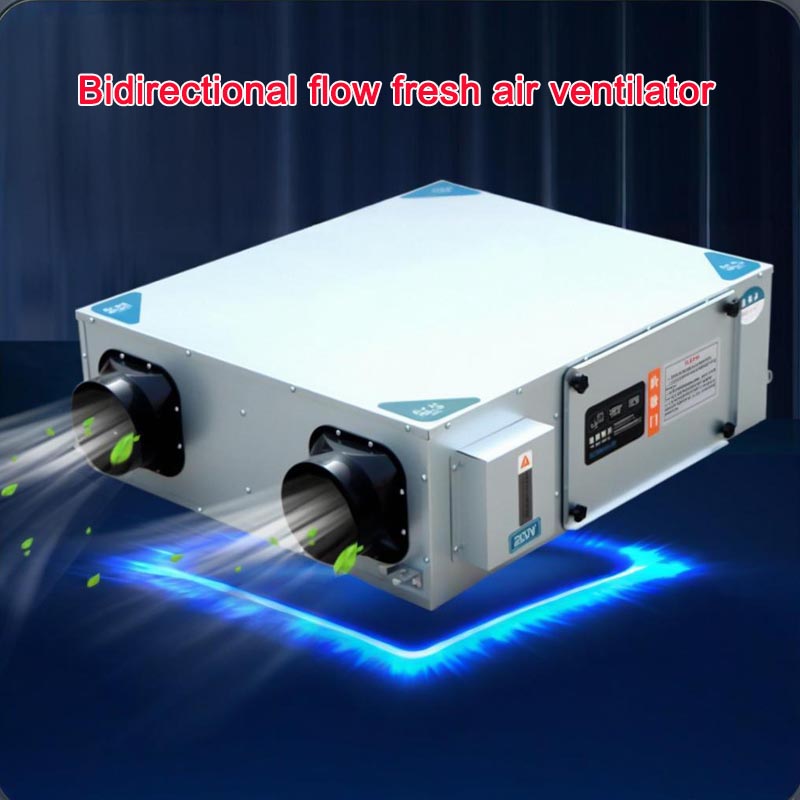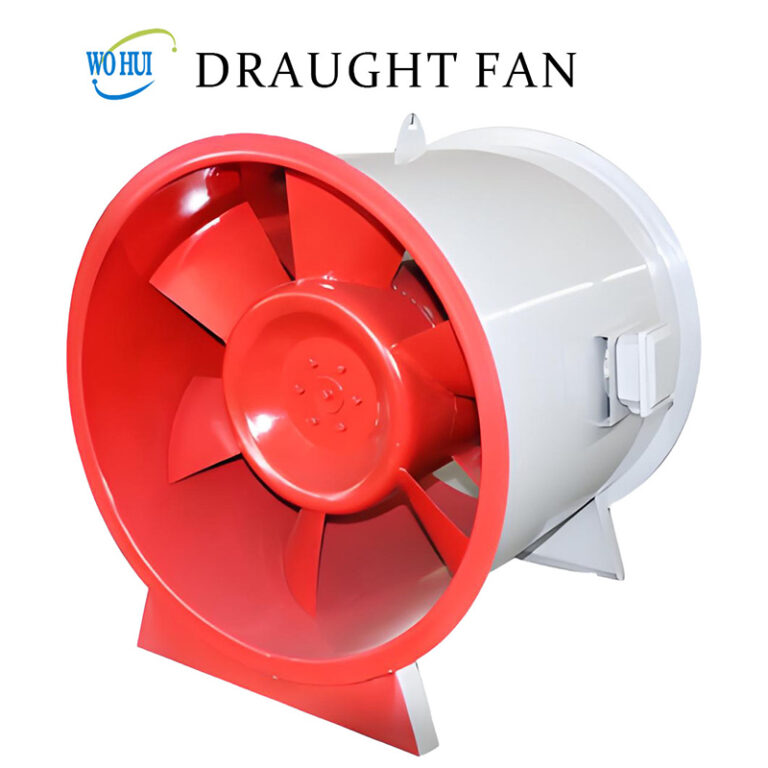

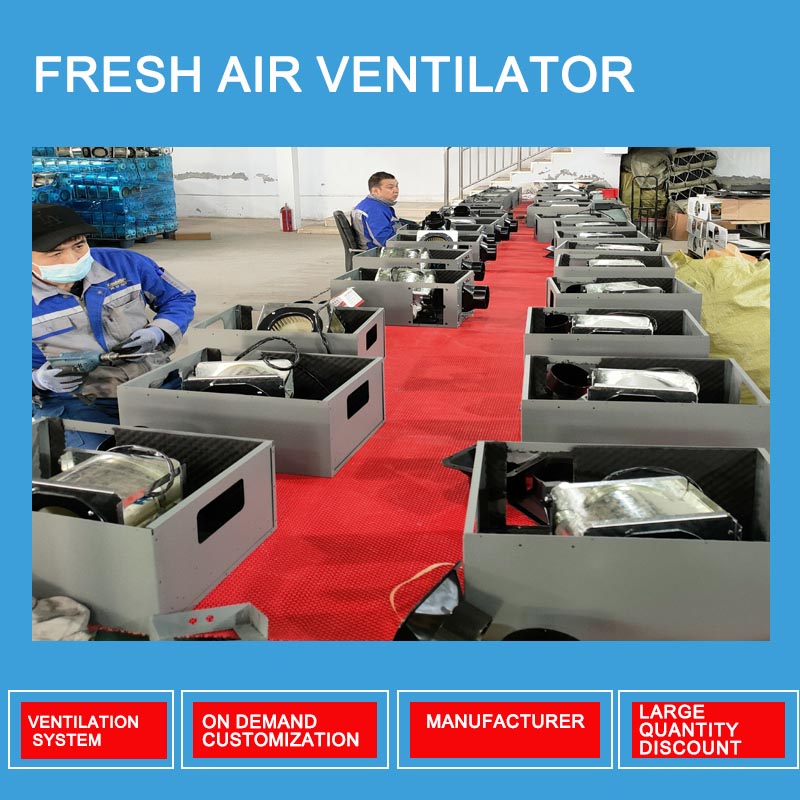
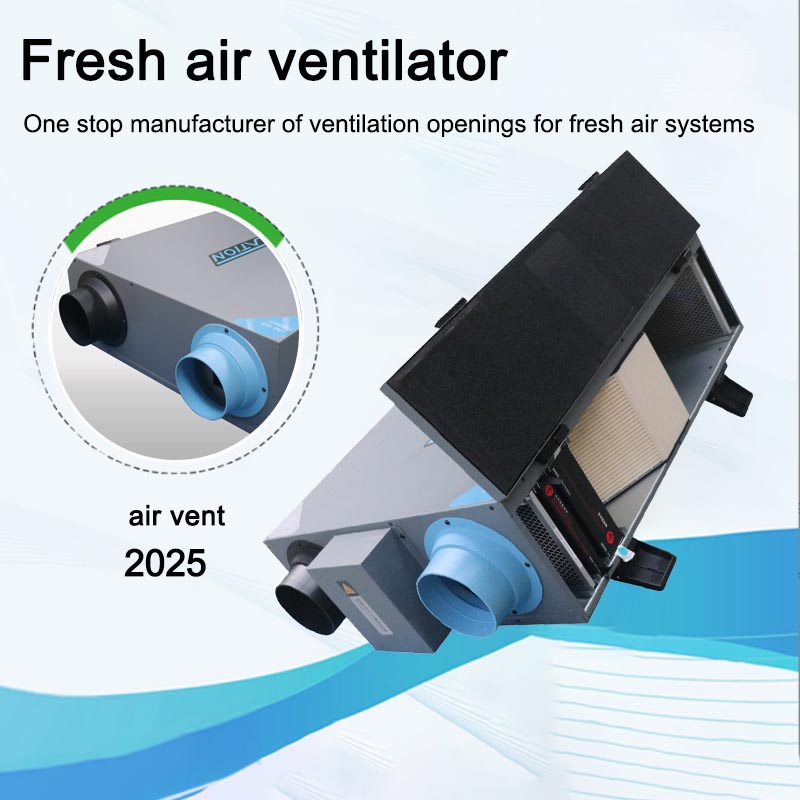
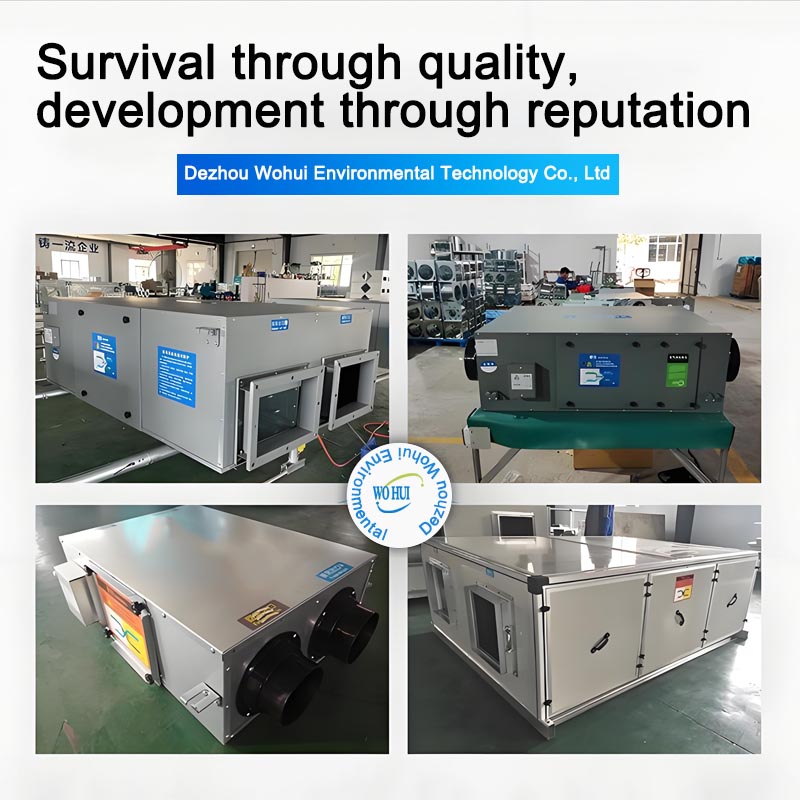
Fresh air exchangers are air handling devices that actively introduce fresh outdoor air and expel stale indoor air while simultaneously recovering energy. Their core function is to improve indoor air quality (IAQ) and reduce ventilation energy consumption. They are widely used in various building types, including residential, office, commercial, and industrial buildings.
Core Working Principle
The core of a fresh air exchanger is “two-way ventilation + energy recovery,” avoiding the energy waste and pollution problems associated with traditional window ventilation. The specific process is as follows:
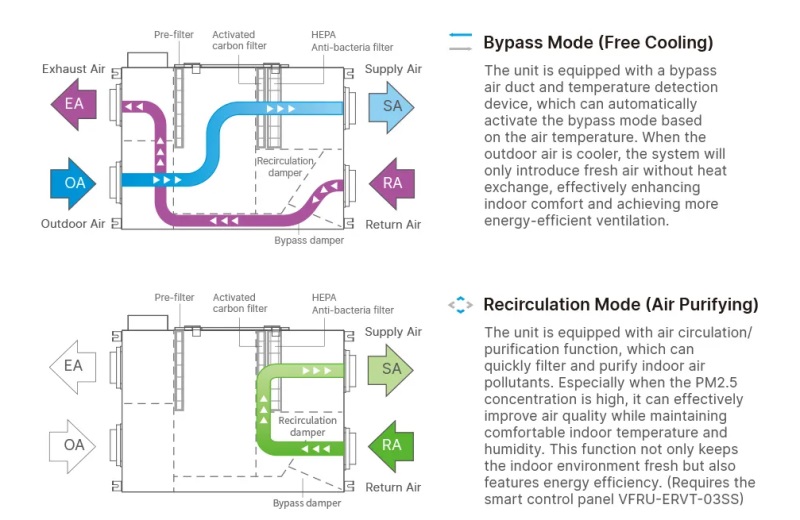
- Fresh Air Introduction: Outdoor air is filtered through an inlet filter (pre-filter/medium-efficiency filter) to remove dust, pollen, particulate matter, and other impurities.
- Energy Exchange: The filtered fresh air enters the energy recovery core, where it exchanges heat (in winter) or cold (in summer) with the stale air exhausted from the room—for example, in winter, the outdoor cold air absorbs heat from the exhaust air and warms up; in summer, the outdoor hot air releases heat and cools down.
- Exhaust Air Discharge: Stale indoor air (containing CO₂, formaldehyde, odors, moisture, etc.) is initially filtered through an exhaust filter, then releases energy through the energy recovery core before being exhausted outdoors.
- Clean Air Supply: The fresh air, having completed energy exchange, can be further purified through activated carbon filters (for odor removal) and HEPA filters (for PM2.5/bacteria removal) before being delivered indoors by a fan.
This process ensures fresh indoor air while reducing energy loss from air conditioning/heating (energy recovery efficiency is typically 60%-90%).
Classification by Energy Recovery Core Type
The energy recovery core is the core component of a fresh air exchanger, directly affecting energy consumption performance:
- Sensible Heat Recovery Type: Only recovers “temperature energy” (e.g., heat from winter air, cold from summer air), not humidity; core materials are mostly aluminum foil or galvanized steel, with lower cost, suitable for dry areas with low humidity requirements.
- Total Heat Recovery Type: Recovers both “temperature and humidity” (e.g., recovering heat and moisture from exhaust air in winter to prevent indoor dryness; recovering cold and moisture from exhaust air in summer to prevent indoor dampness); core materials are mostly paper or polymer films (e.g., ABS film), suitable for humid areas (e.g., the rainy season in southern China) or humidity-sensitive scenarios.
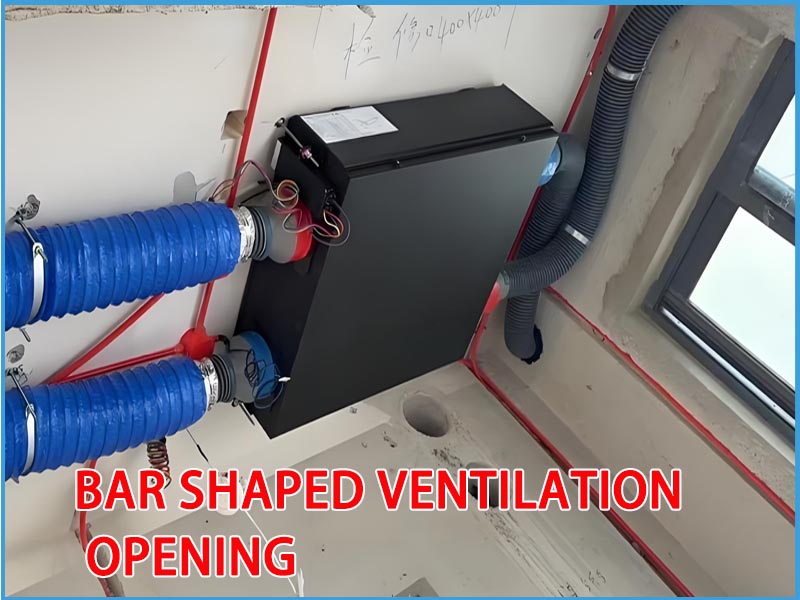
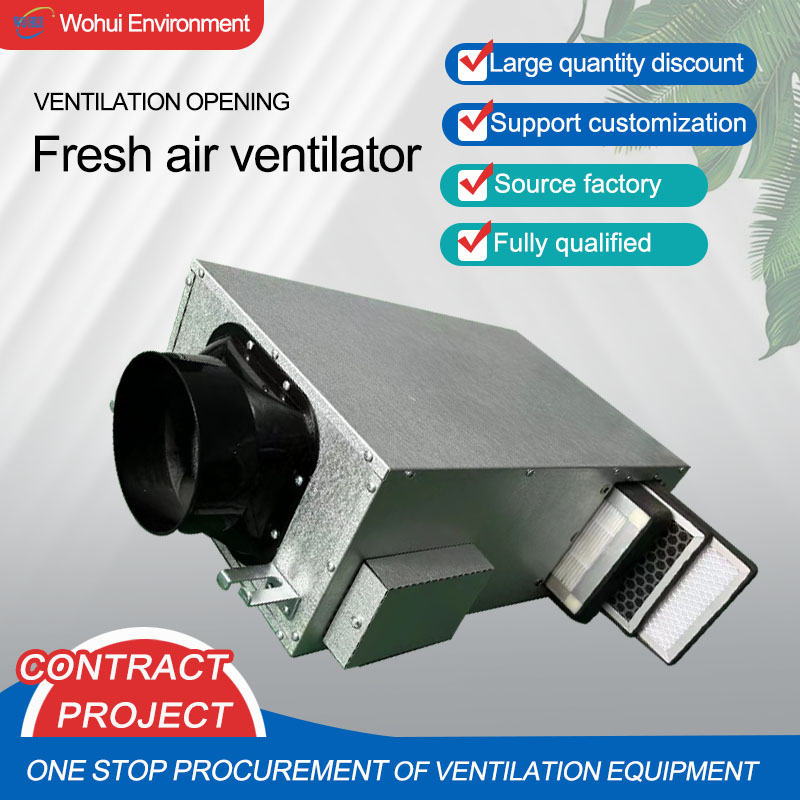
Installation methods are categorized as follows: Ceiling-mounted, Wall-mounted, and Cabinet-style.
The performance of a fresh air exchanger depends on the configuration of its core components. The functions of each component are as follows:
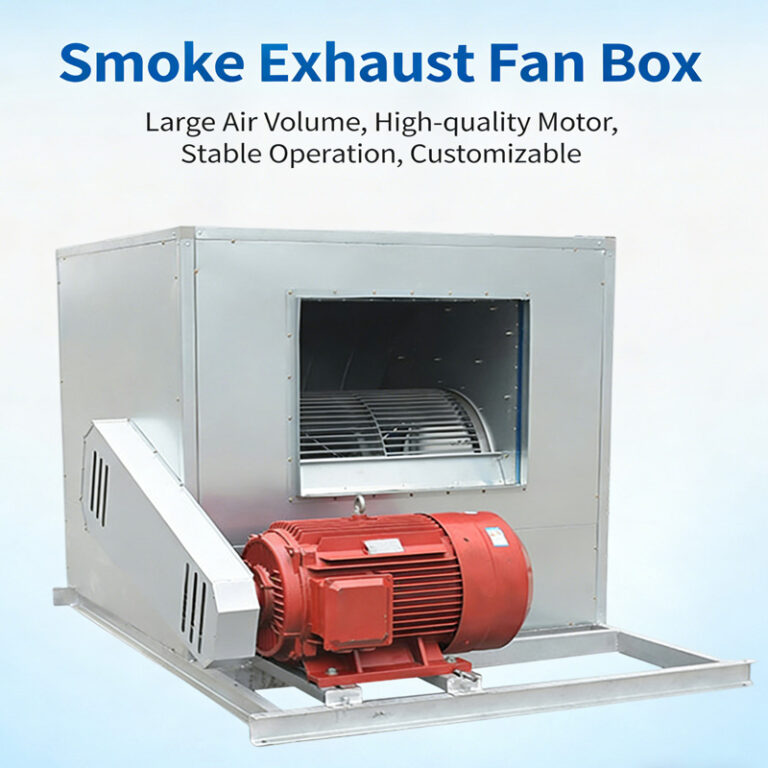
- Fan: Provides the power for airflow, divided into “fresh air fan” and “exhaust fan,” typically using a DC brushless fan (low noise, low energy consumption, and adjustable speed);
- Energy Recovery Core: Enables energy exchange between fresh and exhaust air, determining the equipment’s energy-saving effect;
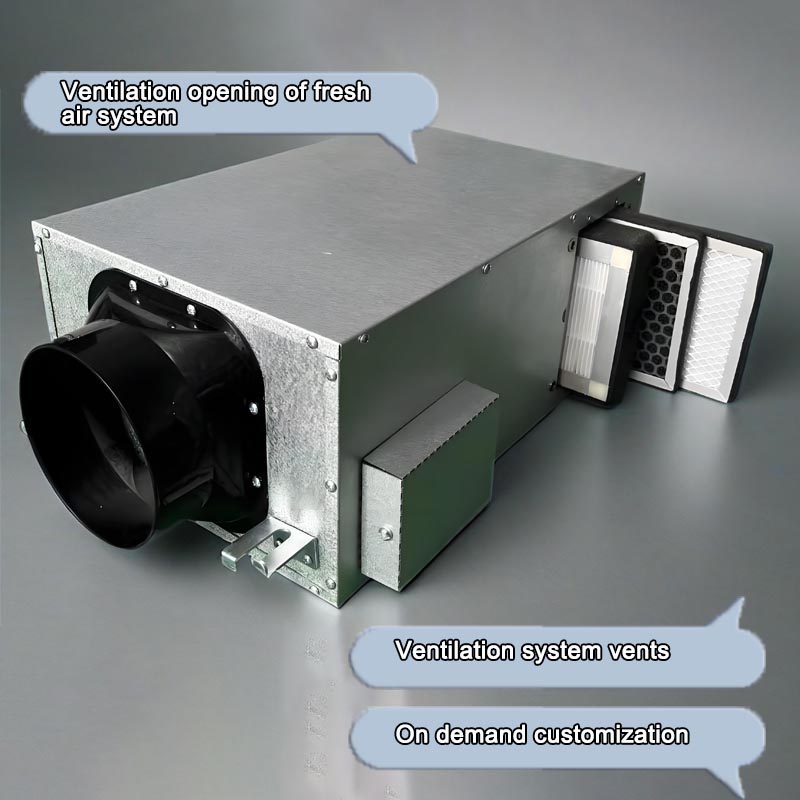
- Filter System: Its core function is air purification. A common combination is “pre-filter + medium-efficiency filter + (optional) activated carbon filter / HEPA filter”;
- Pre-filter (PP cotton / nylon mesh): Filters large particles of dust and hair, protecting subsequent filters;
- Medium-efficiency filter (F8 grade): Filters PM10, pollen, etc.;
- HEPA filter (H11-H13 grade): Filters… PM2.5, bacteria, viruses (suitable for areas with severe smog);
- Activated carbon filter: adsorbs formaldehyde, TVOC, odors (suitable for newly renovated homes or families with pets);
- Control system: includes control panel (manual/touch), sensors (CO₂ sensor, PM2.5 sensor, temperature and humidity sensor), enabling automatic start/stop, airflow adjustment, filter life reminder, etc.;
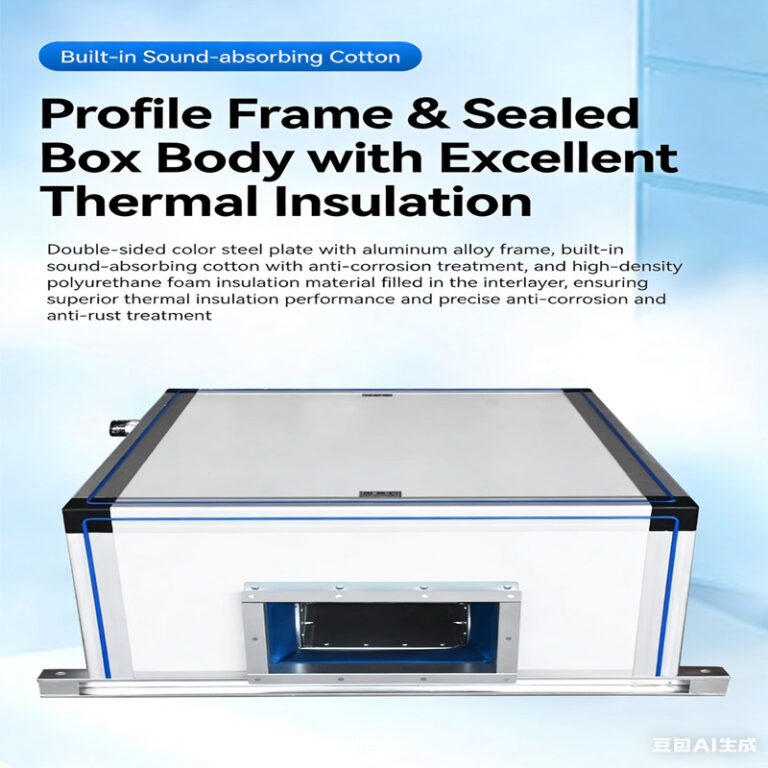
- Noise reduction structure: built-in sound insulation cotton and fan vibration damping pads, some models are equipped with silencers at the air outlet to reduce operating noise.
Core functions and advantages
- Improve indoor air quality: Actively removes indoor CO₂ (avoiding stuffiness and dizziness), formaldehyde (volatile organic compounds from new renovations), TVOC (furniture odors), cooking fumes, pet odors, and other pollutants; Introduces filtered outdoor fresh air, reducing PM2.5, pollen, dust, bacteria, and other pollutants entering the room, suitable for allergies or areas with high smog incidence.
- Energy Saving and Consumption Reduction: Through an energy recovery core, energy loss caused by the temperature difference between fresh air and indoor air is reduced – for example, heating energy consumption can be reduced by 30%-50% in winter and air conditioning energy consumption by 20%-40% in summer, resulting in greater long-term energy savings.
- Maintaining Stable Indoor Temperature and Humidity: Total heat recovery models balance indoor humidity, avoiding the dryness caused by opening windows in winter or the stuffiness caused by opening windows in summer.
- Replacing Open Windows and Avoiding External Disturbances: Ventilation is possible without opening windows, preventing outdoor noise (such as traffic noise), dust, and insects from entering the room, making it especially suitable for residences near streets or in heavily polluted areas.
Applicable Scenarios
- Residential: Newly renovated homes (formaldehyde removal), families with elderly/children/allergies (improving air cleanliness), street-facing/high-rise residences (avoiding noise/dust);
- Office: Enclosed office buildings, conference rooms (reducing CO₂ concentration, improving work efficiency);
- Commercial: Hotel rooms, restaurants (reducing odors), gyms (removing sweat odors, introducing fresh air);
- Special Scenarios: Hospital wards (requiring a low-bacteria environment), laboratories (removing harmful gases), basements (improving dampness and poor ventilation).
Selection Points
Determine Airflow: Airflow (unit: m³/h) determines the coverage area and needs to be calculated based on room volume and number of people – usually estimated as “30m³ of fresh air per person per hour” or “room volume × 1-2 air changes per hour” (e.g., a 15㎡ bedroom with a ceiling height of 2.8m requires an airflow of 15×2.8×1.5≈63m³/h, and an 80m³/h model can be selected). Choose the energy recovery type:
- Dry northern regions: Sensible heat recovery type (low cost, meets temperature requirements);
- Humid southern regions/sensitive to humidity:** Total heat recovery type preferred (avoids indoor humidity or dryness).
Pay attention to filter configuration
- In areas with severe smog: HEPA filter (H11 grade or higher) is required;
- Newly renovated houses: Activated carbon filter is required (focusing on formaldehyde/TVOC removal);
- Regularly replacing the filter is key to ensuring effectiveness. Choose a model with convenient filter replacement and reasonable cost;
- Noise control: For quiet areas such as bedrooms and studies, choose a model with noise levels ≤40dB; for living rooms, this can be relaxed to below 45dB.
Usage Precautions
- Regularly replace the filter: It is recommended to replace the pre-filter every 1-3 months, and the medium-efficiency/HEPA filter every 3-6 months (adjust according to usage frequency and air quality). Otherwise, it will affect the purification effect and the lifespan of the fan;
- Clean the energy recovery core: The total heat recovery core (excluding paper-based cores) can be cleaned periodically with a vacuum cleaner to avoid clogging and affecting energy recovery efficiency;
- Avoid frequent short-term start-stop: Frequent start-stop increases energy consumption. It is recommended to run continuously according to indoor air quality or by setting a timer mode.