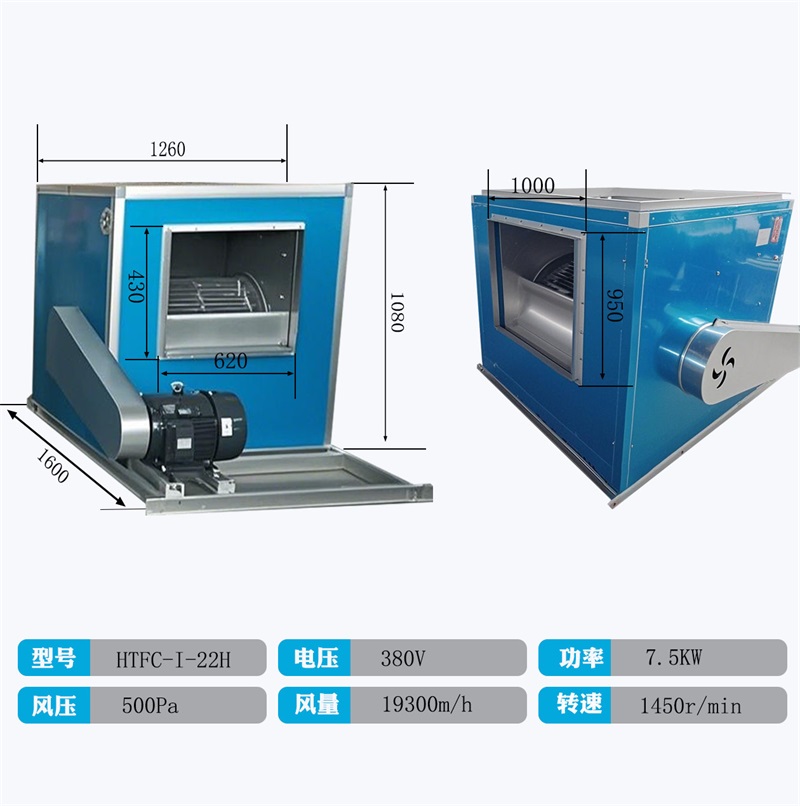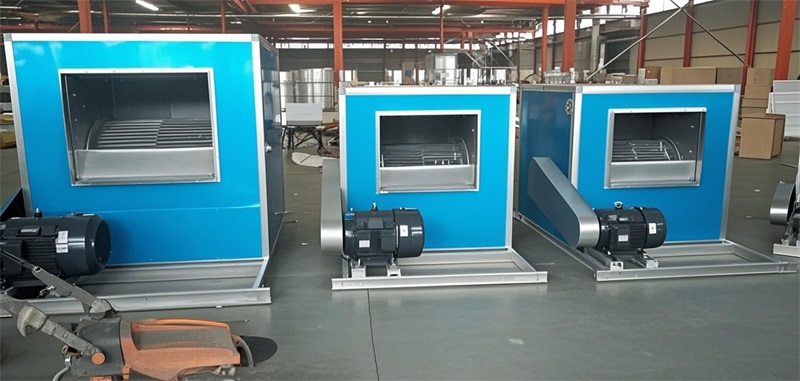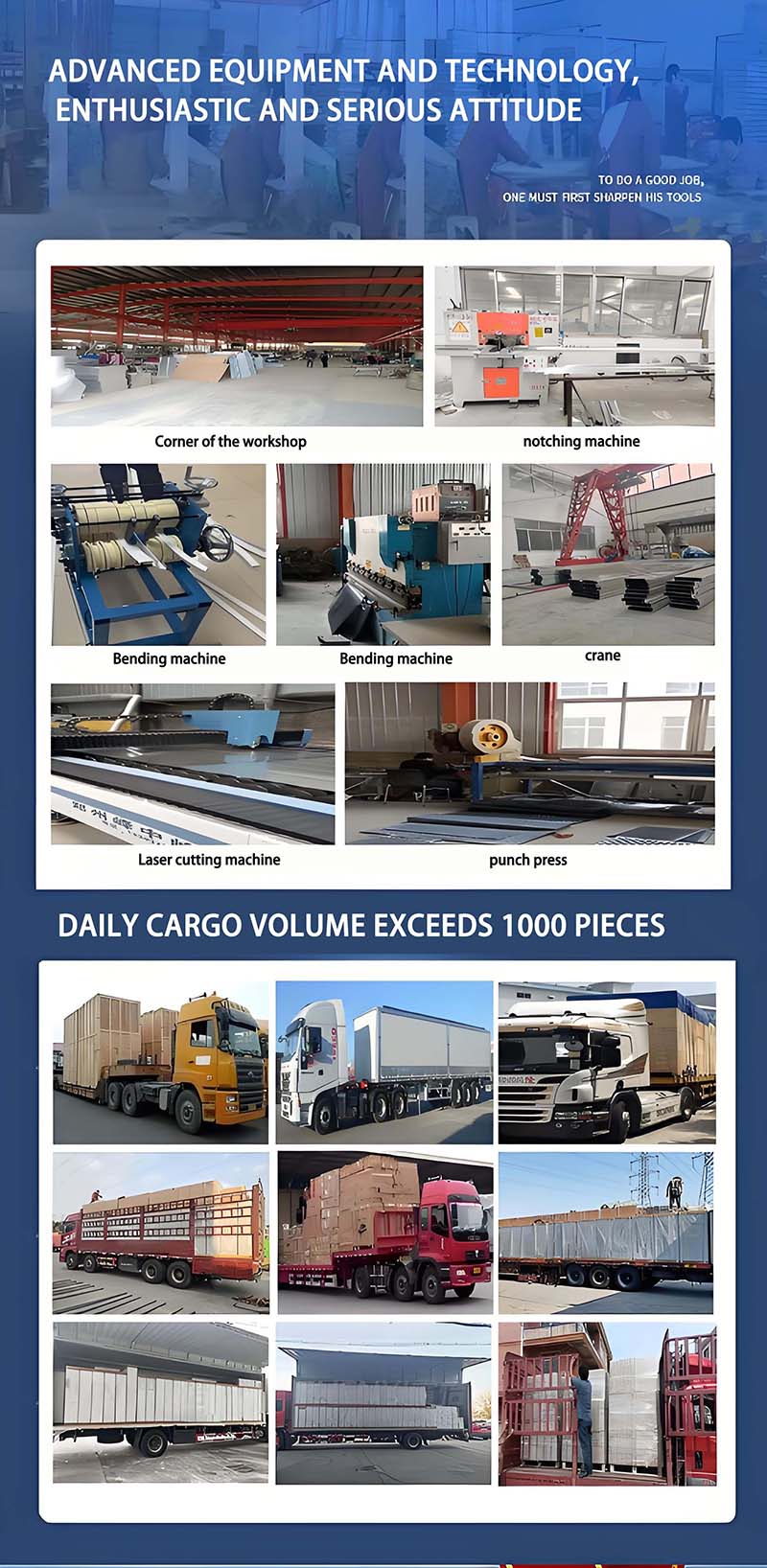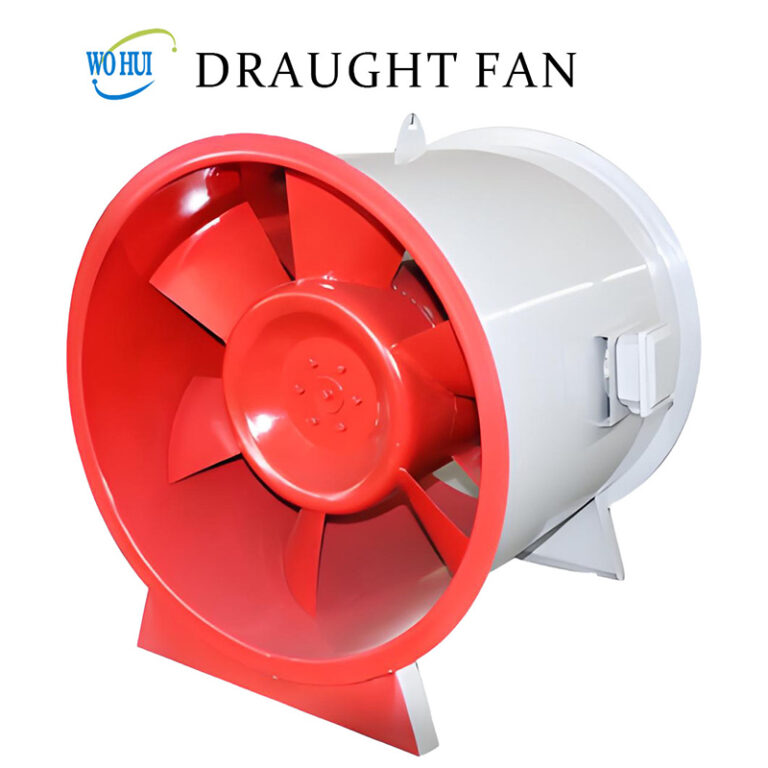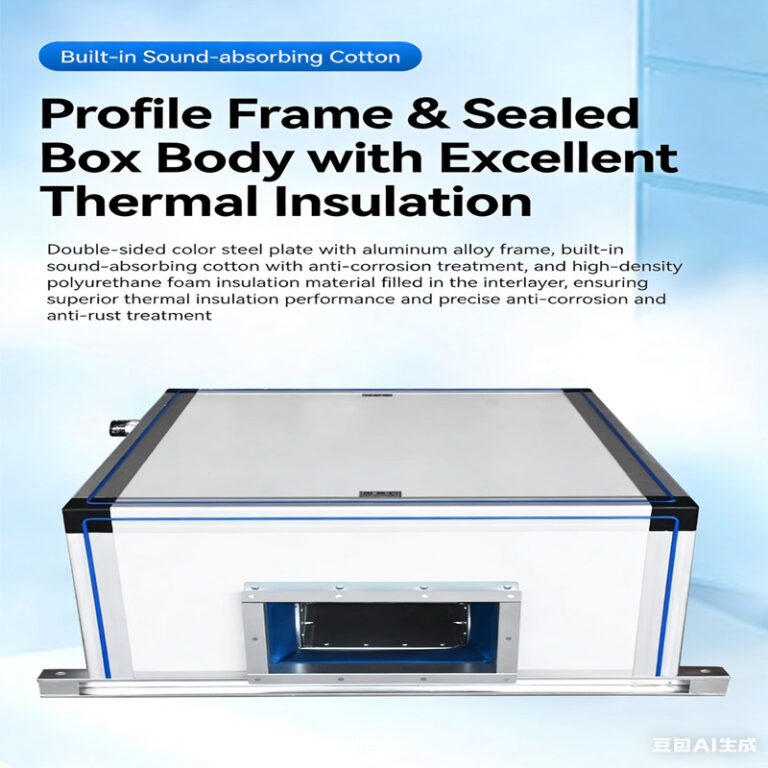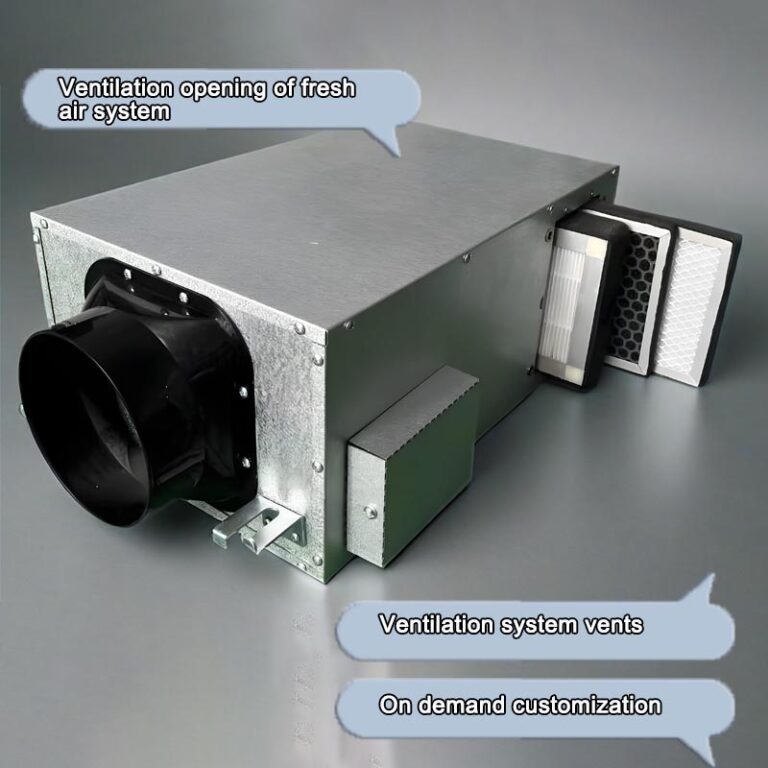

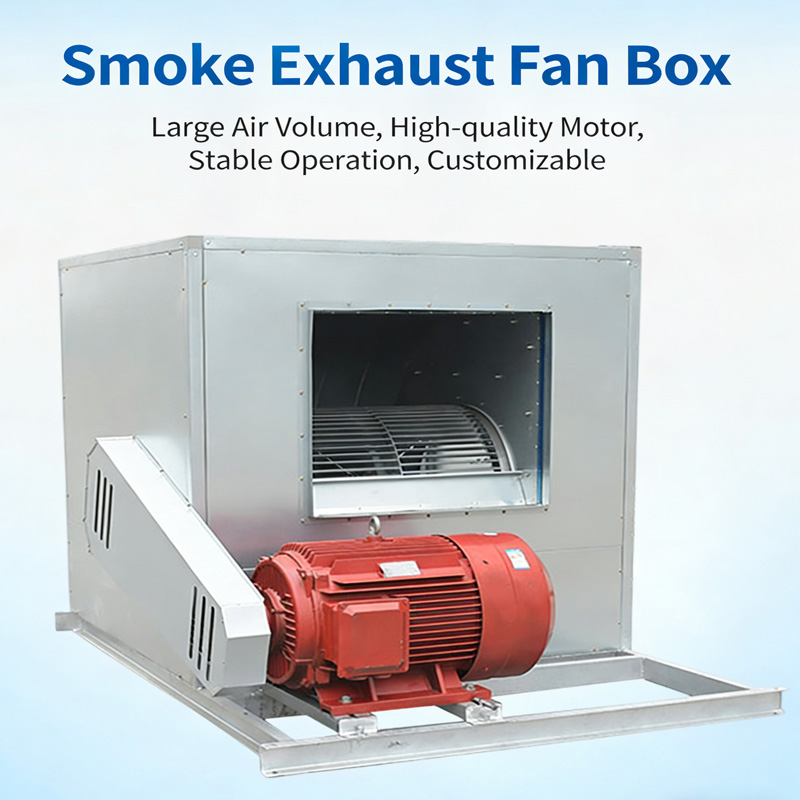
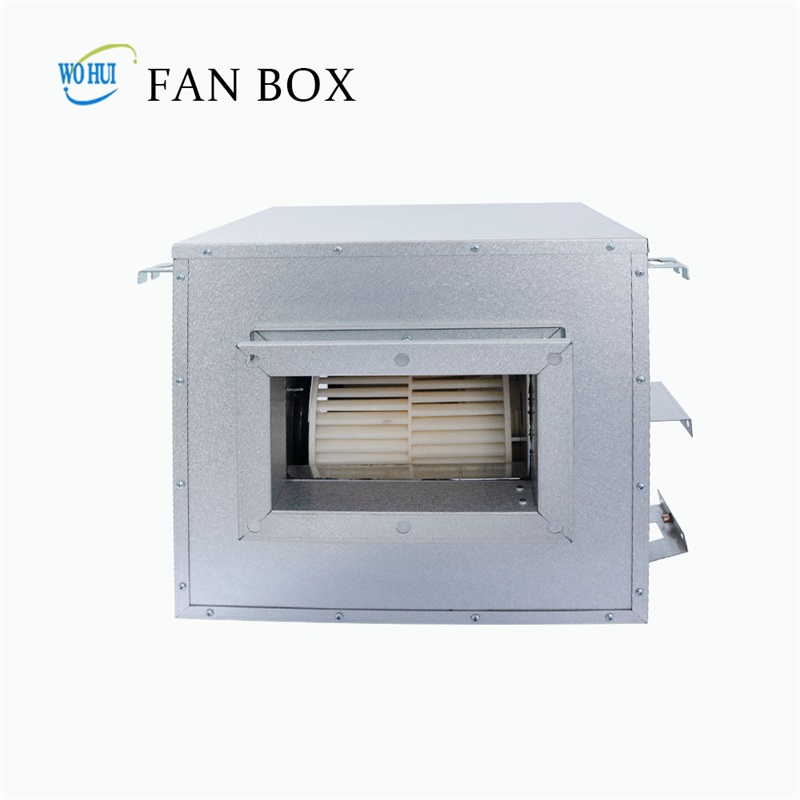
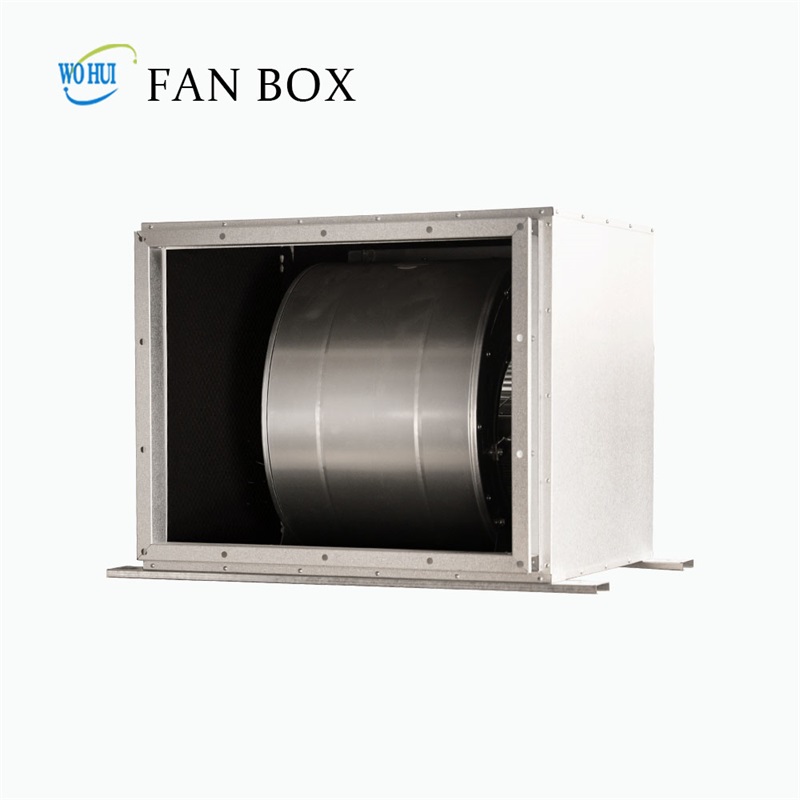
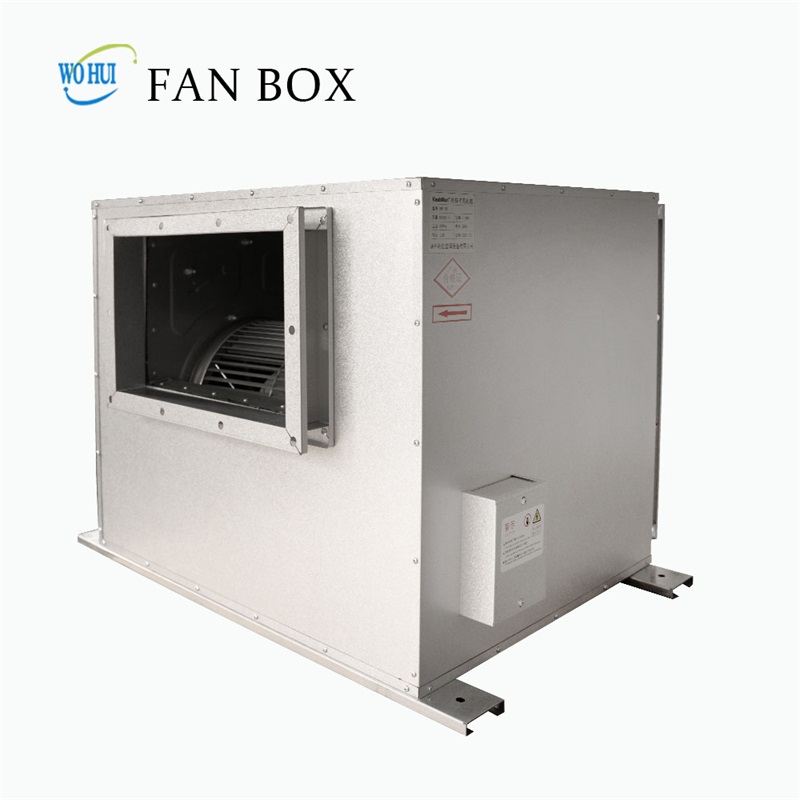
A fan box is an industrial-grade fan unit integrating ventilation, noise reduction, and smoke extraction functions. It is widely used in HVAC and fire protection systems in civil buildings, factory workshops, underground garages, hospitals, shopping malls, and other locations. It generates airflow through a built-in centrifugal or axial fan, and combined with the box structure, achieves low noise, low vibration, and high air volume operation, making it an important component of modern building ventilation systems.
Core Types and Functional Differentiation
Classified by Application:
- Ventilation Fan Box: Used for daily air circulation and exchange, suitable for office buildings, schools, hotels, and other places with strict environmental noise requirements.
- Smoke Extraction Fan Box: Specifically designed for exhausting high-temperature smoke during fires, capable of continuous operation at 280℃ for over 100 minutes, meeting fire safety 3C certification standards.
Classified by Structural Form:
Centrifugal Fan Box: High air pressure, high efficiency, low noise, suitable for long-distance air supply and precision environments (such as hospitals and clean rooms). Axial flow fan enclosure: Large air volume, compact size, suitable for short-distance rapid ventilation scenarios (such as underground parking lots).
Motor installation methods:
- Type A (External motor): The motor is located outside the enclosure to avoid high-temperature effects; specifically designed for fire smoke extraction.
- Type B (Internal motor): Compact structure, primarily used for general ventilation.
Parameters
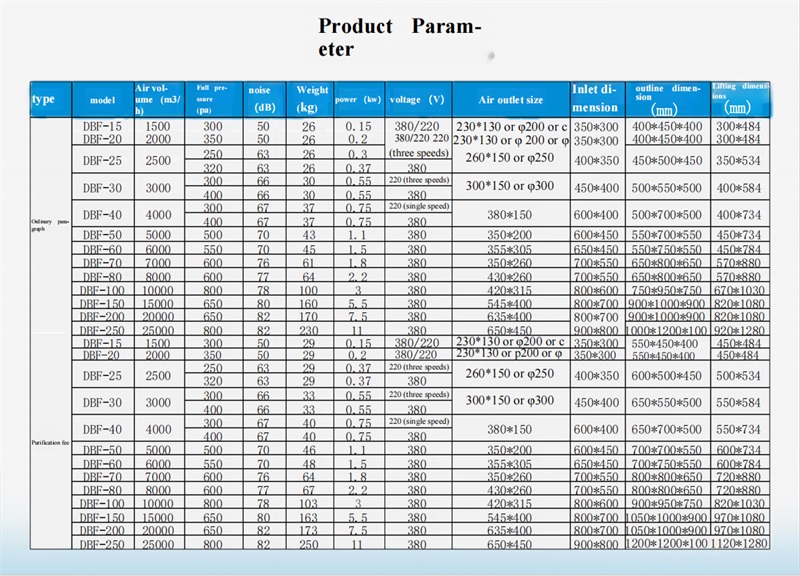
- Airflow: Wide range, commonly 1000–63000 m³/h, meeting the needs of different spaces.
- Air Pressure (Total Pressure): Low pressure ≤1000Pa, medium pressure 1000–3000Pa, high pressure up to 15000Pa.
- Noise Level: Excellent models can be controlled between 32–63dB, close to a library environment.
- Energy Efficiency: Energy-saving products can save 20%–30% more electricity than traditional fans, significantly reducing electricity costs in the long term.
Purchase and Usage Recommendations
Airflow and air pressure must be matched to the duct resistance. A safety factor of 1.05–1.1 times the airflow and 1.10–1.15 times the air pressure is recommended.
Prioritize products with 3C certification to ensure fire safety compliance.
For quiet places such as hospitals and schools, low-noise design (<60dB) is important.
Installation Precautions:
- The base must have sufficient strength and be equipped with vibration damping pads. Flexible hoses are used for connecting the air inlet and outlet to reduce vibration transmission.
- The bracket is fixed to a concrete base to avoid suspended installation.
Maintenance Tips:
- Regularly clean dust from the impeller to prevent imbalance from exacerbating vibration.
- Check that the grounding resistance is greater than 0.5MΩ to ensure electrical safety.